Tuesday Night Talk to Junior Cyclists

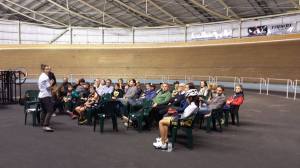
On Tuesday night, during the usual Brunswick Cycling Club​ Racing Night, I had the chance to talk to the juniors and their parents about injury prevention and performance optimisation. I was happily surprised by the number of people attending (over 30). Thanks to everyone who promoted this short talk and brought their friends along.11137073_1605401766364928_670034534_n

For those who had questions on young kids development and training,   please refer to the website of Canadian Sport for Life and the Long Term Athlete Development (LTAD) program for 6-9 years old, 10-12 years’old and older. I couldn’t find an equivalent Australian program except for general guidelines by the Australian Institute of Sport (AIS) and they refer to the Canadian program for more information.

Please fill this poll and don’t hesitate to give feedback regarding the talk.

For those who haven’t had the chance to access the report yet, they are available here:
Part 1: Fitting your bike
Part 2: Being fit on your bike

7 Tips to Get the Most Out of Your Body on Your Bike (Part 2)

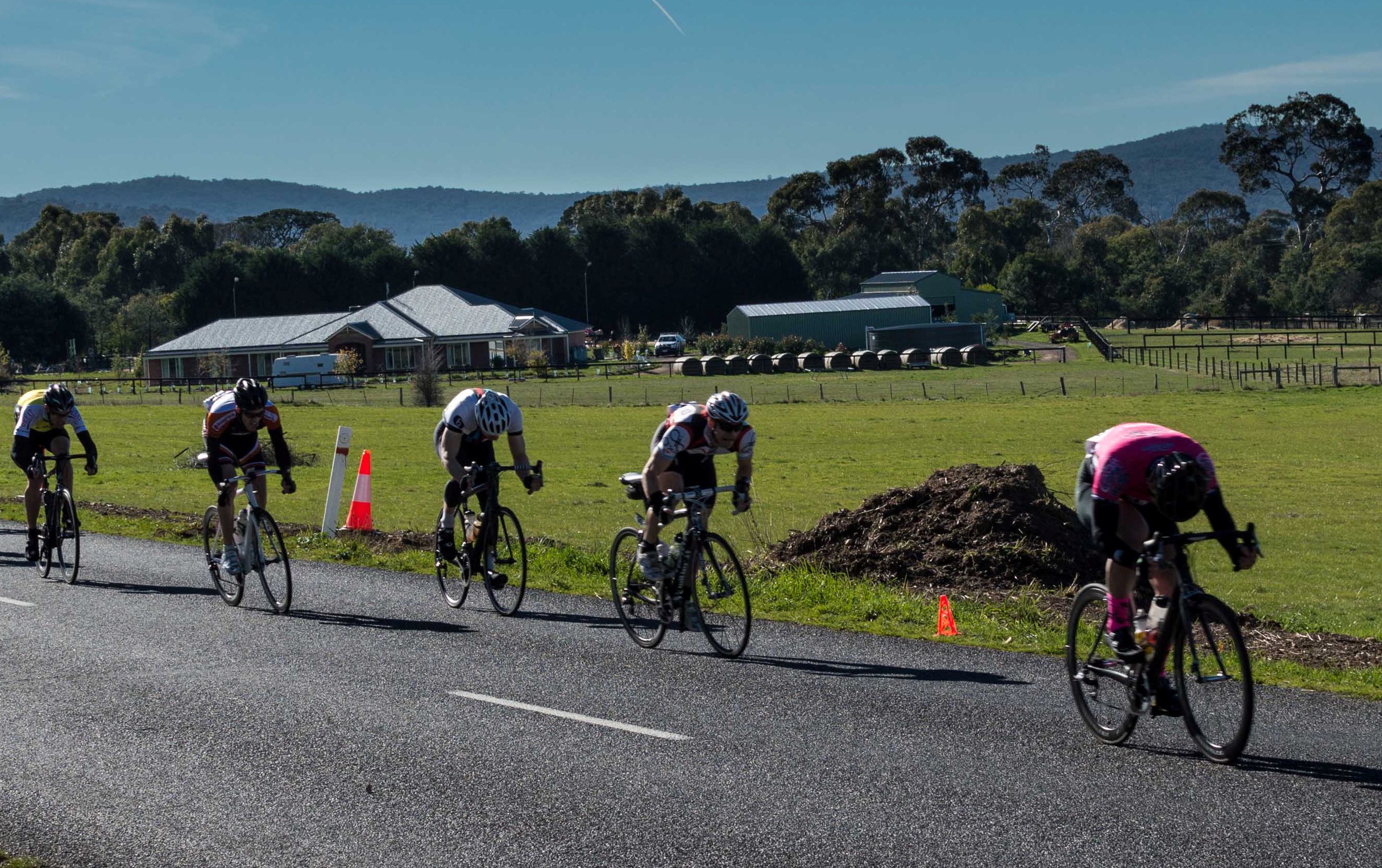
In collaboration with my workplace, I’ve put together the best tips to help you ride longer, ride more often and even beat your mates.  final sprint

These tips will give you simple and practical information to improve your cycling capacity and to avoid injuries. This second part focus on body preparation to optimise your performance and prevent injuries. It is a good starting guide to know where to start when getting more serious about riding and racing.

Learn how to be fit on your bike: 7 Tips to Get the Most Out of Your Body on Your Bike (Part 2).

If you haven’t read the Part one, it’s a useful starting guide on bike fitting.

7 Tips to Get the Most Out of Your Body on Your Bike (Part 1)

In collaboration with my workplace, I’ve put together the best tips to help you ride longer, ride more often and even beat your mates.16206715609_f9c2286b39_o

These tips will give you simple and practical information to improve your cycling capacity and to avoid injuries. This first part is mainly about fitting your bike properly according to your type of riding and personal body characteristics. It is a good starting guide to fit your bike at home.

Learn how to fit your bike : 7 Tips to Get the Most Out of Your Body on Your Bike (Part 1)

The second part is coming soon and will focus on “being fit for your bike”. The content will include the main muscles to strengthen, pedaling cadence and injury prevention.

Don’t hesitate to give feedback or ask questions.

Cyclist Neck’s Health

How annoying is it to limit your riding time because of neck and upper back soreness, fatigue or even pain? What can you do to prevent your neck from stopping you riding without having to sit straight up or support your head with a pole?

The neck structures have an essential role which is to hold the head in an optimal position to move quickly and see the road hazards to avoid incident. Unfortunately, the best position for cycling puts a lot of load on the muscles and joints of the neck and upper thoracic spine. However, there are a few ways to avoid or at least to delay the onset of neck discomfort while cycling. The main factors affecting the neck comfort are everyday postures, the bike fitting, the variation of positions and the neck muscles endurance and strength.

Posture: Every cyclist who isn’t a world tour professional works or studies more hours than they cycle most weeks in a year. This situation explains why it is important to have a good posture that avoid strain on your neck and back for prolonged hours every day. Concentrated Businessman Working On Computer In OfficeMaintaining a good posture will help you start your ride without a neck already sore.

The worse example of sustained posture leading to neck pain and soreness is related to computer use. The most common position people adopt after a few minutes or hours on the computer is a forward head Cath- correct sitiing posture June'14posture. This posture puts a lot of strain on the cervical spine and the muscles at the back of the neck. This posture can be prevented or minimised by having a desk properly adapted for your height and by being aware of your incorrect postural habits (slouching, sitting on the edge of the chair, leaning on one side, holding the phone between the ear and the shoulder…)
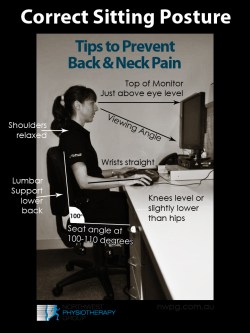
Some simple modifications can be done to improve your working station without the need of new furniture; boxes and books can usually be used to address the main problems.

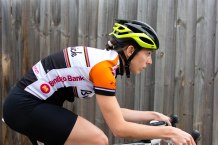
Bike fitting: Make sure the reach is not too far forward or too low for your arm and trunk length. It is possible to have an aerodynamic position if needed without being outstretched to a level straining your neck. Refer to the article on bike fitting and position of handlebar for more details on this topic.
DSC_1836

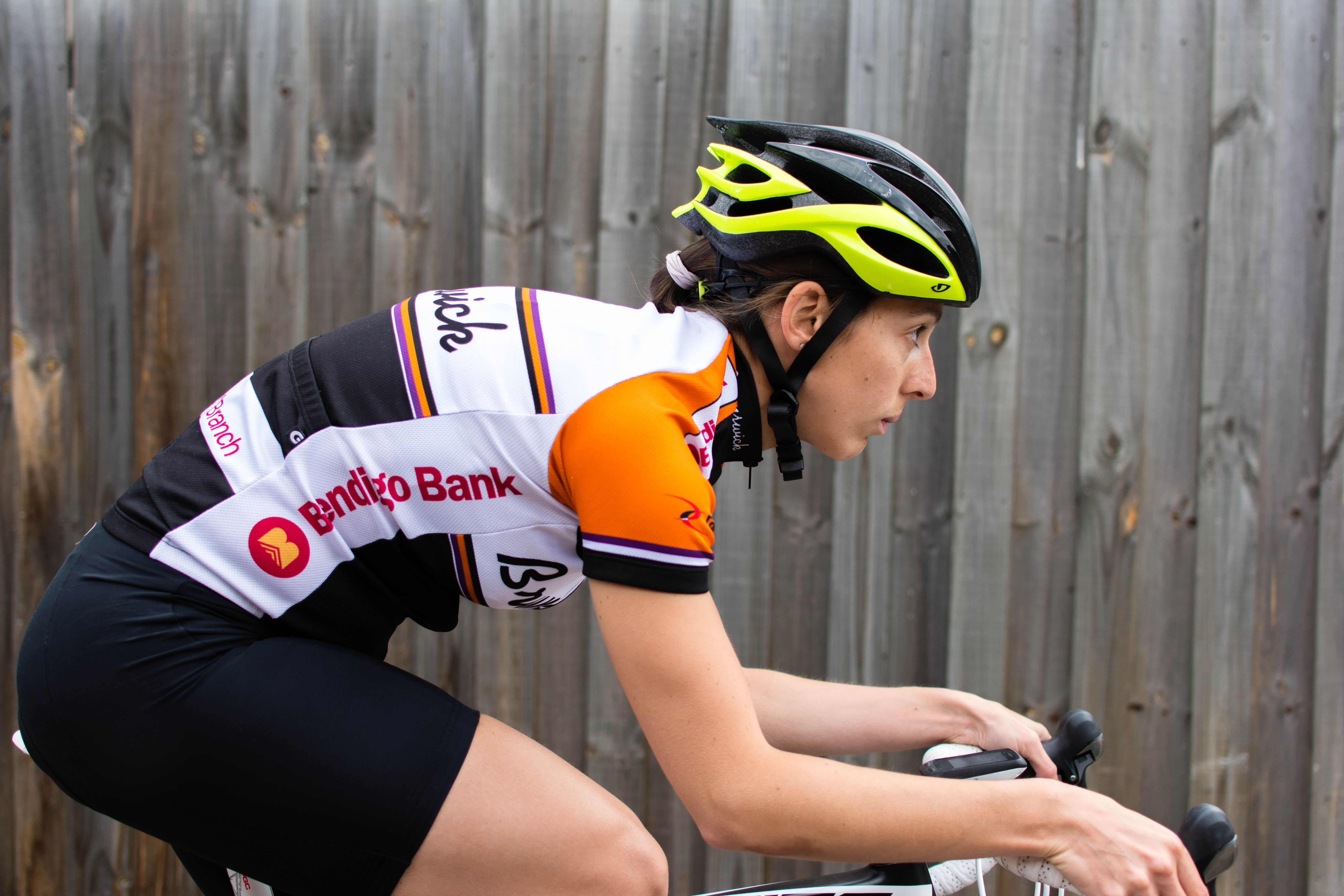
Standard racing position

DSC_1837

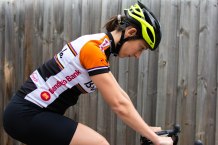
“Chin in” position to decrease the load on the structures at the back of the neck
DSC_1838

Simple stretch for muscle at the back of the neck while riding. Keep looking where you are going!

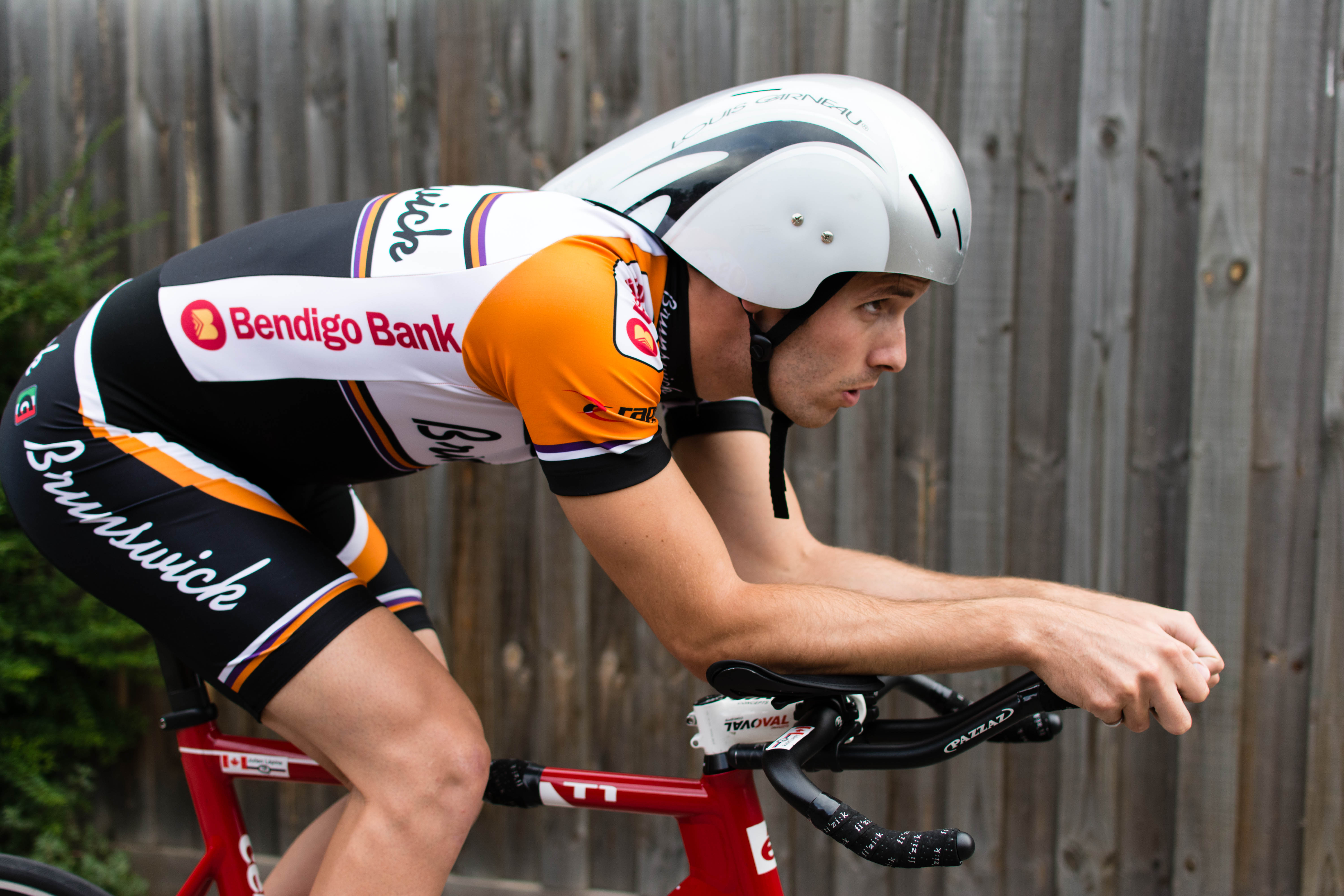
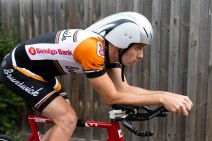
Variation of positions: In sport engineering, the most comfortable position has been described as one you can slightly modify regularly without affecting your action or simply the next position you are going to adopt. Therefore, changing your hand position during a ride, will modify the neck position. When you can’t change your hand position (e.g. time trial), relaxing and lowering the shoulders and bringing the chin down is the best position to decrease the stress on the muscles and joints at the back of the neck. However, if you are wearing an aero helmet with a long tail, the aerodynamics will be affected. This position also requires sufficient endurance of the deep neck flexors which are important neck stabilisers.
DSC_1841

Standard time trial position

DSC_1842

More relaxed time trial position (not optimal for aerodynamics)

Neck muscles strength and endurance: There are a great number of small and big muscles in the neck to support the head which is quite heavy and mainly supported by muscles because of the anatomy of the cervical spine. Two exercises can be performed to strengthen the key muscles in the neck.
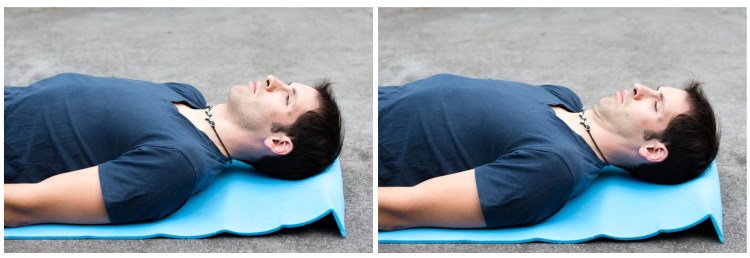
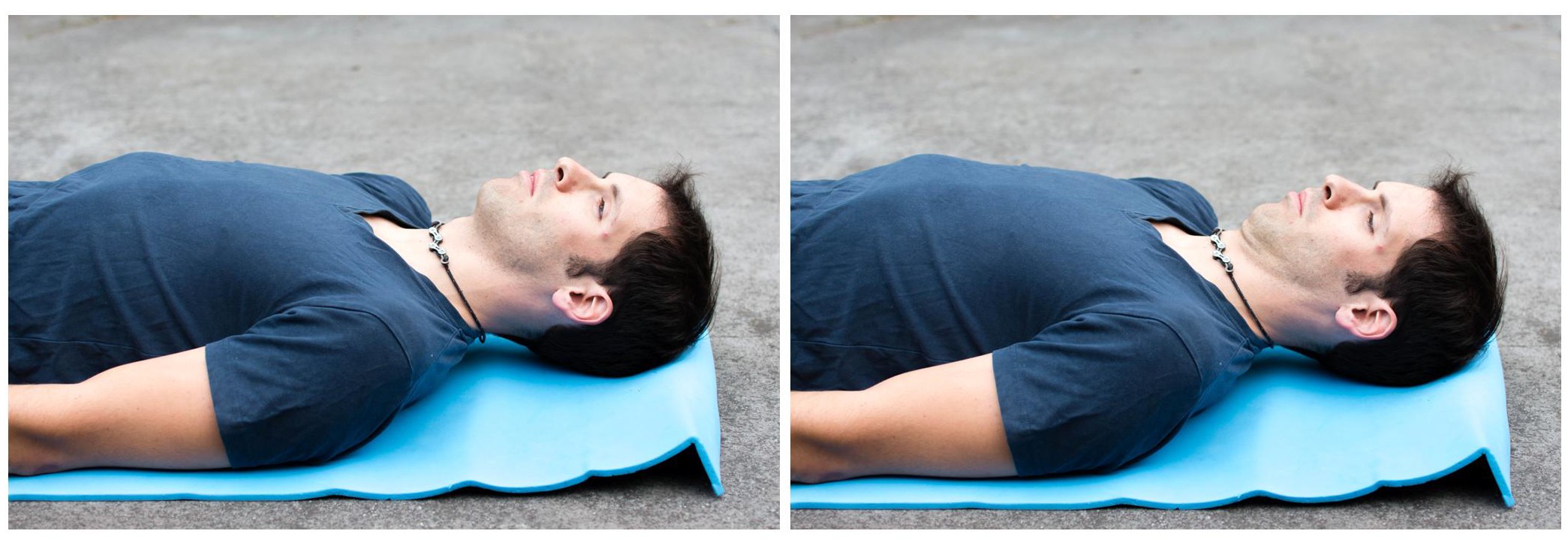
DNF

Deep Neck Flexors Exercise

Deep neck flexors: Lying on your back on a flat surface, slowly bring the chin back without tensing up superficial muscles of the neck and shoulders such as SCM, scalenes and trapezius. This movement is called the upper cervical flexion.

Stay in this position for 10 seconds and feel the superficial muscles to make sure they remain relax all along. This exercise is also gently stretching the small muscle at the base of the skull and in the upper cervical region. Therefore, it is important to stop the flexion movement as soon as you feel a little stretch or increase in tension of the muscle at the back of the head since putting too much strain on these little muscles can lead to headache. Repeat movement 5-10X.

This is an excellent exercise to start with. There are numerous ways to progress this exercise and make it more functional for cyclists that will be the topic of a future post.
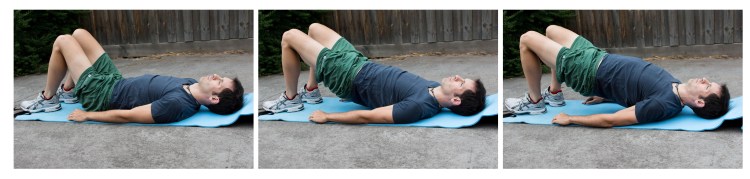
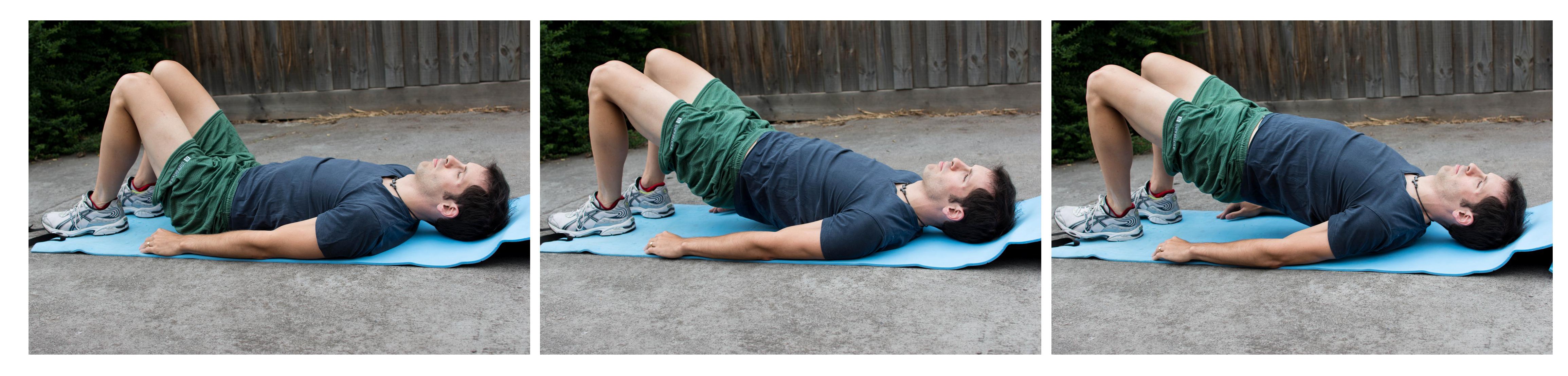
neck extensors

Neck Extensors Exercise

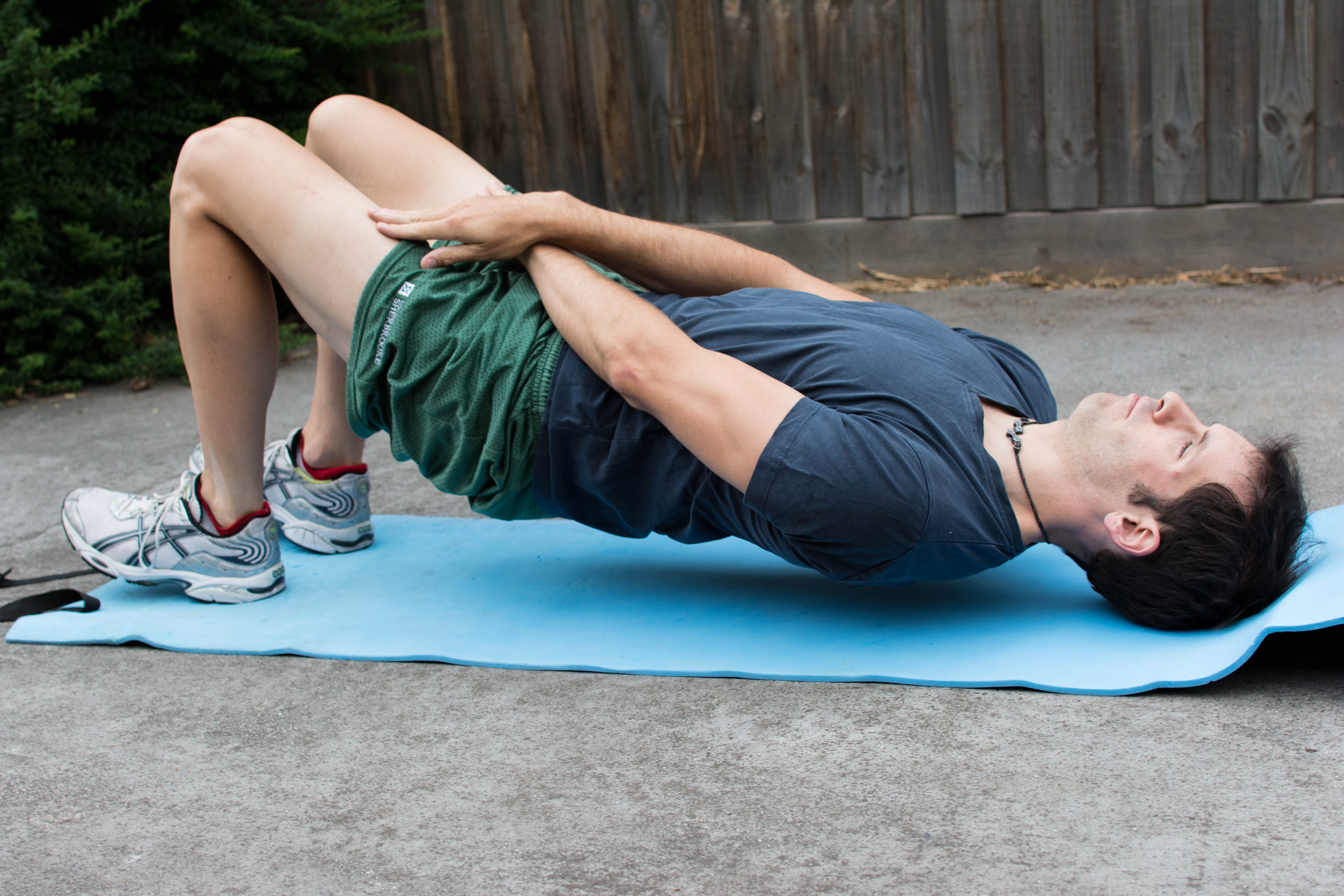
Neck extensors: Crook lying on your back on a stable but soft surface (mat, carpet, etc.), lift the pelvis to be in a bridging position and push back with your head and push down with your elbow like if you wanted to lift the shoulders from the ground. Hold the contraction for 5 seconds, a good start is to o a set of 10 repetitions. The support from the arm is quite significant when performing this exercise initially and only a small movement if any should be done. As the neck gets stronger, the load is more on the neck and less on the arms and the range of movement increases.
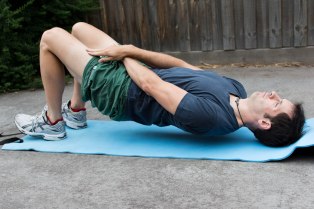
Progression of this exercise is to do it without the support of the arms

Progression of this exercise is to do it without the support of the arms

Remember that all strengthening exercises shouldn’t cause pain or discomfort. If you are not sure if these exercises are appropriate for you or you have trouble performing them, please contact me and I will be happy to help.
Christmas Gift Ideas to Help Recovery

If you have all the imaginable tools for your bike, you might want to take care of your body which allows you to go as fast on your bike. Here are some ideas that could help you recover from your big weeks of training or riding, or just to relax and give yourself a little treat.

1. One hour of Therapeutic Massage or Sport Massage help reduce muscle tension and activate blood flow in the body which helps recovery and can prevent injuries. Avoid having a massage close to an important race or event, especially if you are not use to it because your body might feel heavy and slow for 24 to 48 hours after.

2. Some little pieces of equipment are also available for self massage to release tight muscles. Depending on the area your want to aim, there are different shapes and stiffness. The  Foam Roller or Myofascial Roller is really effective to release big muscles like the quadriceps, hamstrings, gluteal and even the calf. It can also be use to stretch the back by lying on it. Different lengths, diameter and firmness are available so think about what you will do with it before buying one. To carry the roller to events, the shorter are preferable and the standard diameter is 15cm. Tiger Tail Massager

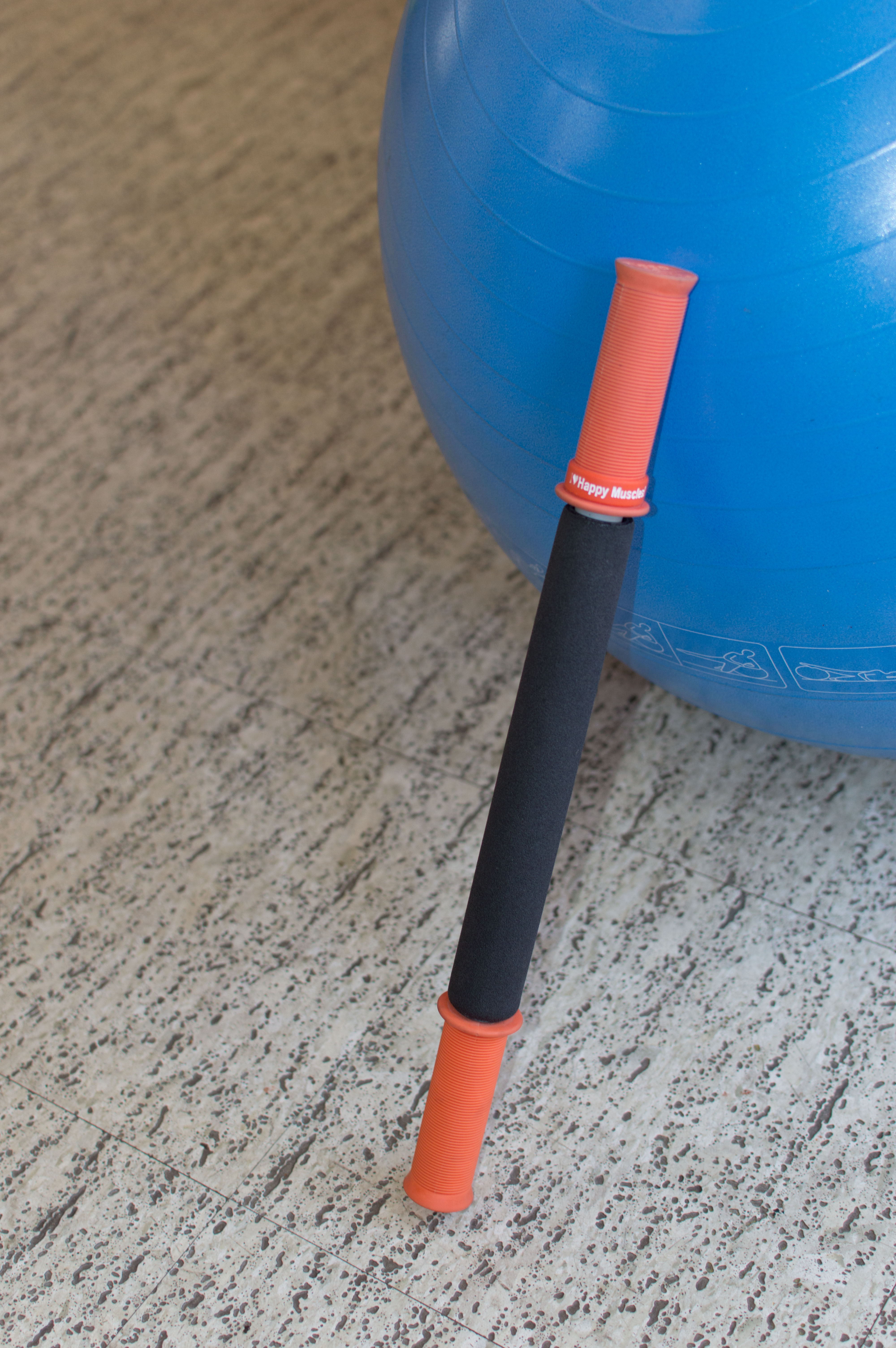
3. If you don’t like to lay on the floor to release your muscle by yourself or that the pressure of the foam roller is to big, the Tiger Tail Massager is an other tool that could help you. It is like a rolling pin for muscles. You can roll it on your leg and have someone doing it if you need it on your arms. It’s easy to carry anywhere.

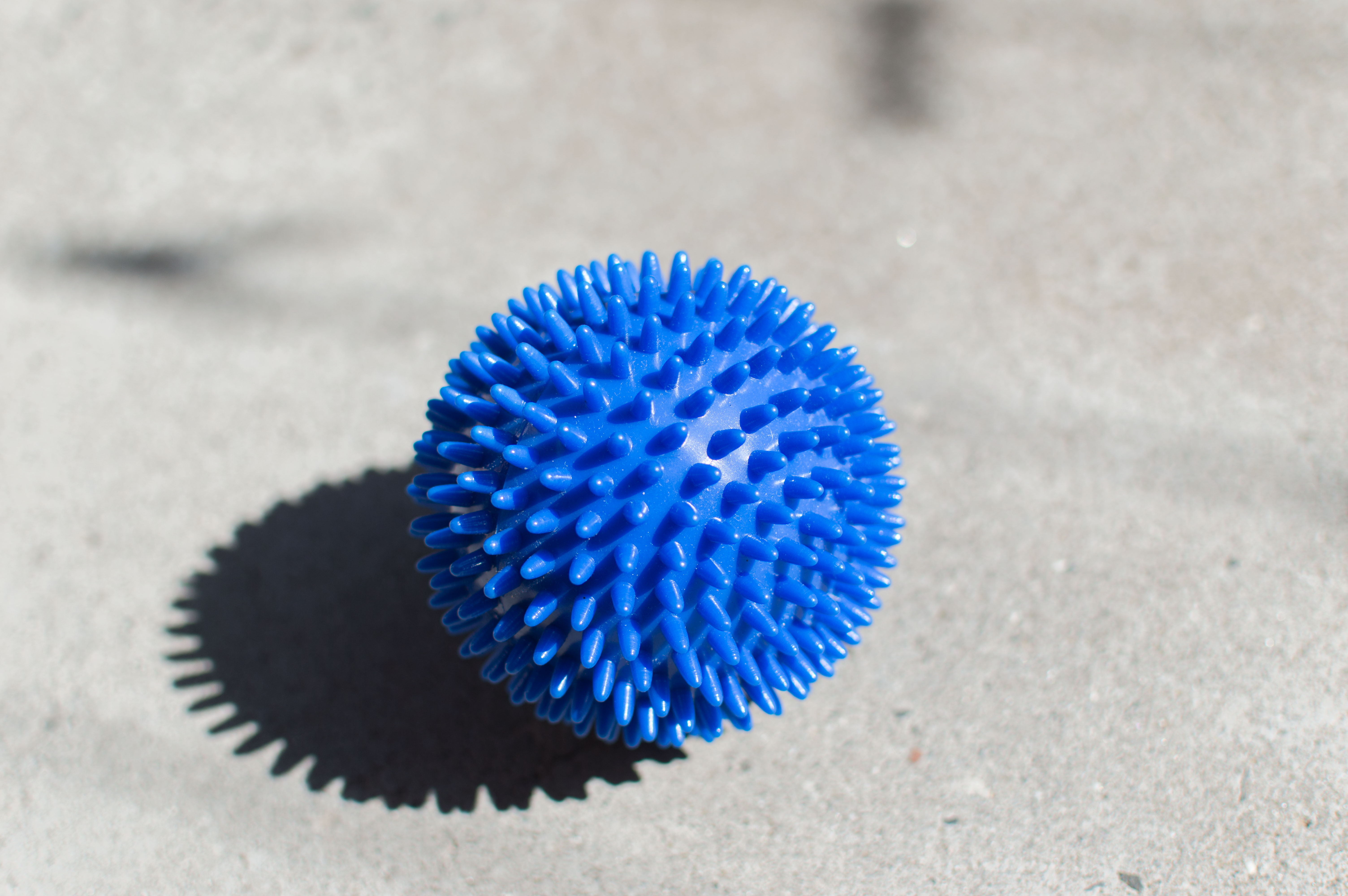
Spiky Ball4. If you try to get into specific area in your back, hips or shoulder, a Spiky Ball is what you need. There is various sizes and firmness of the spikes depending on your need. If you want a light to medium pressure you can use it against a wall and if you want more,  you can lay on it, on the floor.

3. If you feel like you need recovery for your body and your mind, a voucher for a Spa Retreat, Sauna and Contrast Baths can combine relaxation, massage and a great occasion to spend time with good company.

If you try to get rid of your tight muscles and don’t succeed, there might be underlying issue causing those muscles to tighten up. In that case, you should consult a specialist of musculoskeletal health such as Physiotherapists. If you have any questions or concerns, contact me and I will be happy to help.
Christmas Gifts to Take Good Care of Your Bike

Even if you think you have most of tools to repair, clean or transport your bike, some little gadgets you might not have think about could be really useful. Here’s are a few ideas of product to help you take good care of your bike.

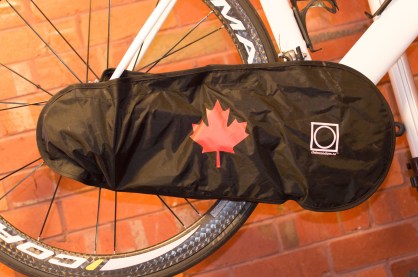
1. If you often need to put your bike in the car and try not to make a mess, the Chain Bag is really useful. It is easy to install with the back wheel on or off, and it avoid putting chain stains everywhere. The Chain Johnny is available to buy online and is not expensive at all. Chain BagIf you need to take off your back wheel to get the bike in the car or even just to wash it, Chain Holder or Chain Keeper are quite useful to keep your chain in place. There are various types available from different brands. Some are pretty small devices that are fixed only to one side and others have a complete axis and fit like a wheel.
2. Where do you repair or clean your bike? Trying to find somewhere to hold your bike while changing parts of it? Maybe you need a Bike Stand. Some are really simple and inexpensive but do the job quite well if it’s only to hold your bike while cleaning it or to change minor parts. On the other hand, if you are the kind of rider who built and rebuilt his bike by changing parts every now and then, you would benefit from a proper Bike Repair Stand holding the top tube.  You can then remove the wheels or every other parts you want without worrying about your bike falling of. For those who have a few bikes and not enough room to store them, the Multiple Bike Standing Rack could be a better solution than having to sell your bikes.

3. Almost everything on a road bike can be fixed with an Hex Keys; stamp, handlebar, saddle, brakes, etc. To save time and make sure everything is tight enough or not too much when it comes down to carbon especially, a Torque Wrench it quite useful. Some are already set to the right tension and other, more expensive, are adjustable.

There are a lot more tools available to repair or built any part of your bike depending on your interest and skills, but this constitute a good start to travel with your bike, store it and repair it.

Christmas Gifts to Improve Training Quality

Santa Claus is on his way! Make sure he knows what you want for your next cycling season. Here are some ideas to improve the quality of  training, suitable for beginners to extremely enthusiastic cyclists.

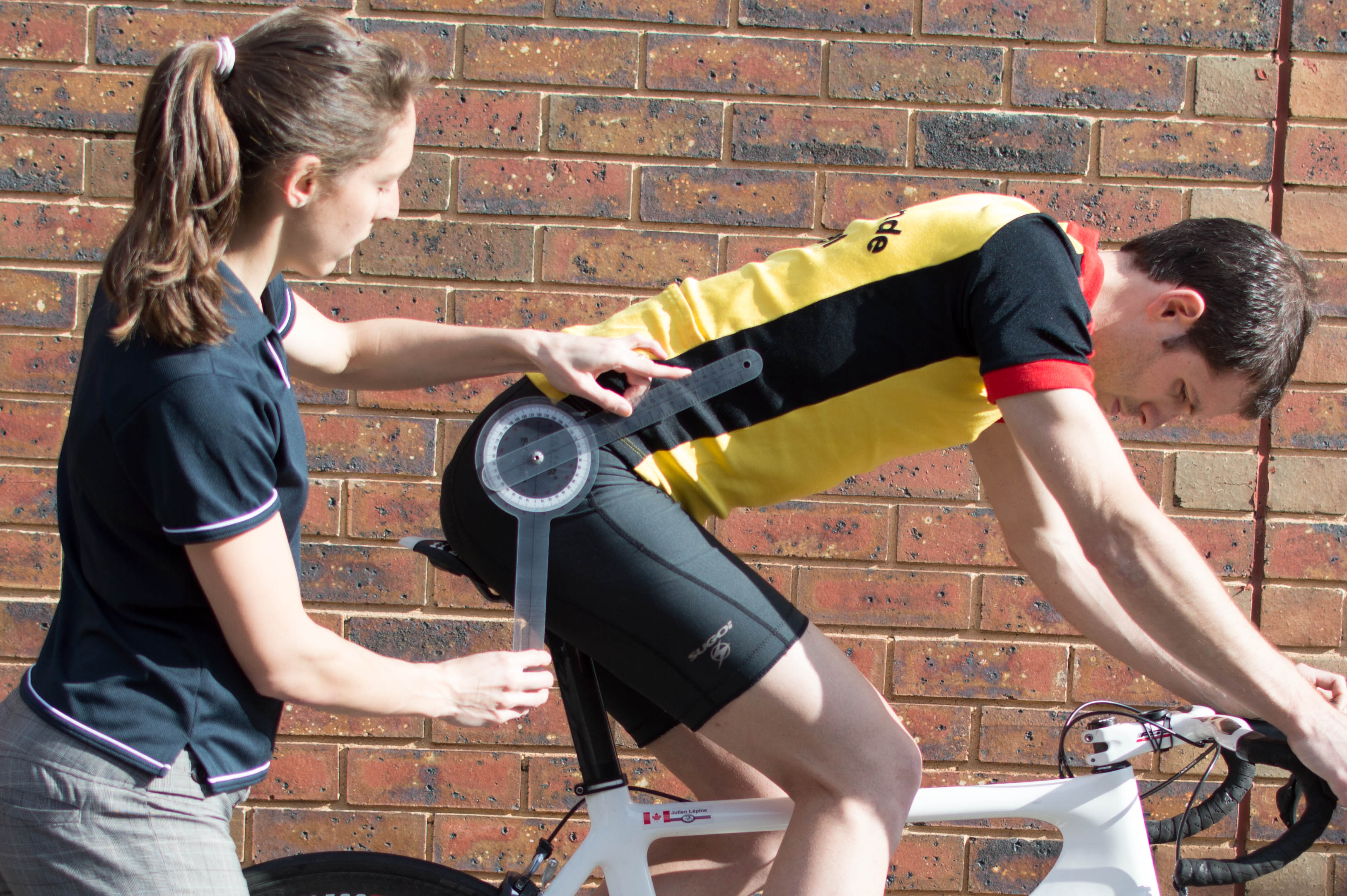
1. Make sure your bike is properly fit for your body characteristics and your needs. Professional Bike Fitting are offered by bike shops or specialists in exercise, movement and body assessment like physiotherapists and exercise physiologists. The prices vary considerably so it is worthwhile to shop around and find was is available in your area. I would definitely recommend to use a specialised resource that will assess not only your length to positioned the saddle and the handlebar, but that will take into account your flexibility, strength, posture, etc. It should also include a dynamic fitting to make sure your cycling stroke are smooth and efficient. The best time to modify your position on the bike is the off season period if you are a competitive rider or as soon as possible if you change bike which can have a different frame geometry and affect your fitting.

2. Record all the data you want from your rides with a Bike GPS, heart rate monitor, cadence and speed sensors, and power meter. With the big range of devices available at the moment, it is important to know which option you want and what data you want to collect: distance, elevation, speed, cadence, power, heart rate? Some devices, like the Garmin Edge 510, have different map options and offers the possibility to load a course which is helpful when riding in new area. The most expensive GPS are tiny computers that have real map like the Garmin Edge 1000. A good advice is to make sure your device is “ANT+” which enables you to connect any “ANT+” sensor your GPS can handle. Garmin recently released new wireless Speed and Cadence Sensors that are quite compact and do not require magnet. They easily fit on the crank arm and the hub of the wheel to give accurate cadence and speed whether your riding outdoor or indoor. On the other hand, if you have a smartphone and just want to record distance, speed and elevation, free apps are available like Strava and Map My Ride.

Spining

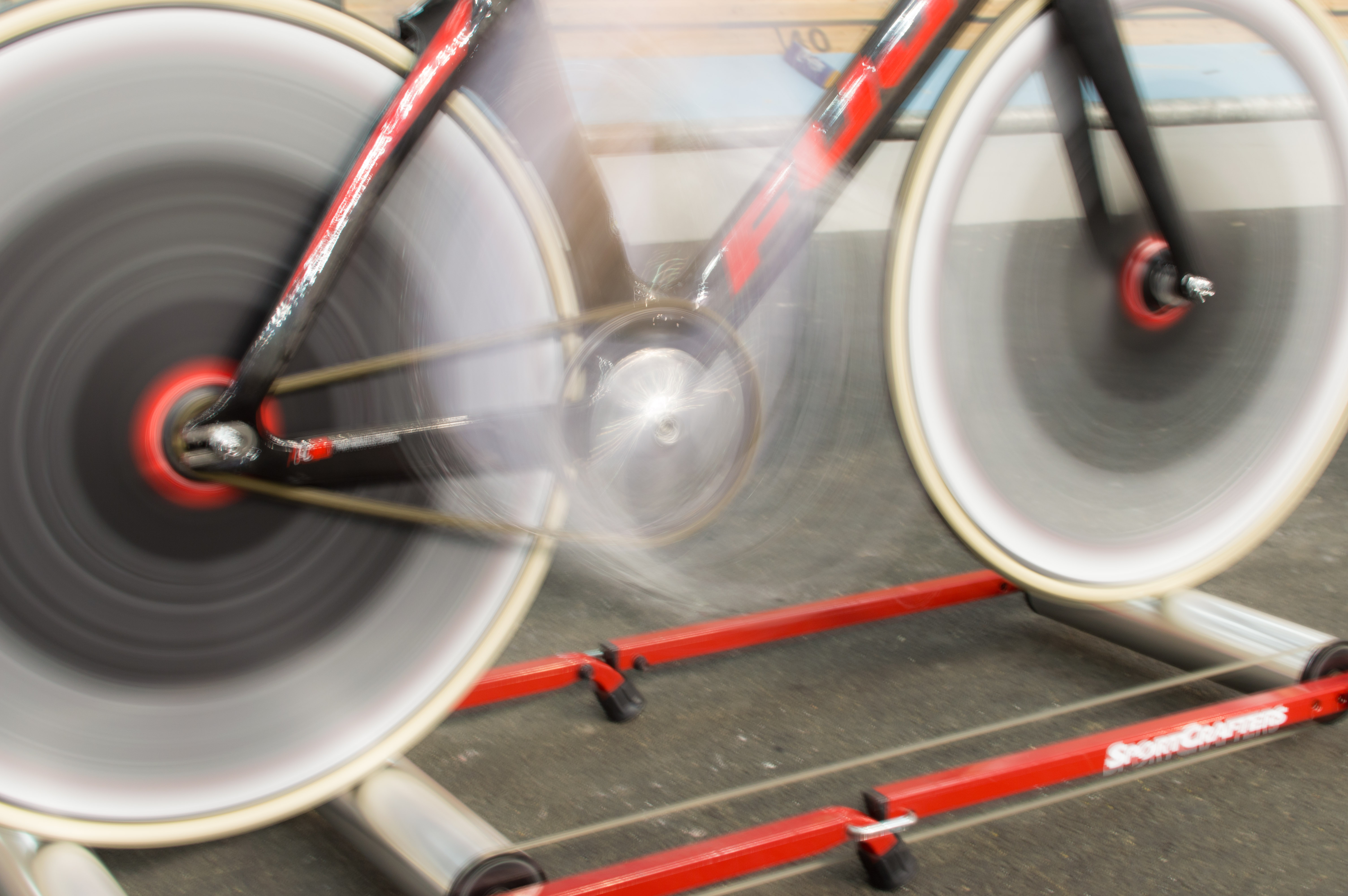
Spinning on the rollers

3. For those days when the weather gets out of control or you just don’t want your ride to feel like a punishment with the rain, the cold and the wind; but you still want to get your legs moving, the Trainer or Rollers are a good option to train indoor. One or the other will be more appropriate according to your needs. If you aim easy to moderately intense ride and want to improve your bike skills, control and balance, the rollers are a good option. If you want to do more intensity and intervals or if your bike skills and balance are not excellent, the trainer is a better option. With the back wheel safely fixed to the trainer, there is no chance of fall and you can vary the intensity to get a good intense workout. If you already have a trainer or rollers, there is a growing variety of Spinning Videos and Motivation Videos that can make your indoor session more enjoyable (See an example below). Some rollers are now also available with resistance but they are a lot more expensive.

With all those ideas to improve the quality of your training, just keep in mind that they are all useless unless you get on your bike and use them…

Enjoy your ride and your new gadgets.

Hands position to improve comfort

Ever wonder how to reduce the vibration in your hands when riding on rough surfaces? Or how to avoid early onset of fatigue and soreness in your arms and hands?

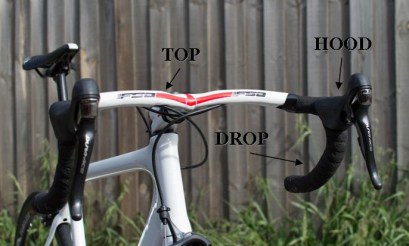
Well, most of the riders racing Paris-Roubaix or any cyclo-cross events seem to have found the position to minimise vibration and shock induced to their hands and arms. In those races with extremely rough surfaces (cobblestone, dirt),  the level of vibration can definetely lead to hand and finger numbness. If you pay attention to the position of cyclists on rough segments of races, you will notice that they tend to ride with their hands on the top of the handlebar. It is somehow surprising since this position makes it harder to keep an aerodynamic posture and to control the bike. Although, avoiding arm fatigue and hand numbness is probably more important in this situation. You can see on the video of the last 40km of  Paris-Roubaix 2014, that most cyclists change their position from the drop to the top within one minute of the cobblestone section.  (The first cobble section is at 14:00)

https://www.youtube.com/watch?v=TOXGU-kyj-I

Even if you don’t plan to ride on cobblestone soon, every area has his own rough road, so this will be helpful to increase comfort when riding.

A recent study (Lepine et al., 2014) showed that there is handlebarsa significant difference in acceleration (vibration) induced at the hands and buttock according to the hands position on the handlebar. In fact, when riding with the hands on the top, there is significantly less vibration than when on the drop, even if the pressure on the handlebar stays the same.
The angle of the wrist also makes a difference in the vibration transmitted through the arms but doens’t affect the saddle. To minimise vibration, the wrist should be kept in a neutral position, meaning aligned with the forearm. Therefore, having the wrists in extension or ulnar deviation should be avoided. This research was made with a small sample of cyclists (2), so can hardly be generalised to the cycling population, but gives good indication of what could be expected.

In the same research, they assessed the impact of the cyclist’s position on vibration, with two different wheel sets. The results were quite different according to the position of the cyclist. The most comfortable wheel set (tested previously with standardised cyclist position) induced more vibration with the cyclist on the brake hood and wrist deviation than the other wheel set with the cyclist having his hand on the top. These results emphasise the importance of the cyclist position on the bike. I would add that the relation between vibration and cyclist position is probably due to the weight of the cyclist which is much more than the bike.

From my physiotherapist point of view, the position of the wrist and elbow when on the top of the handlebar is close to the best position for a joint which is the resting position. This position puts less strain in a joint and correspond to a straight wrist and slightly bent the elbow (70° of flexion). In this position, the joints are more relaxed and can adapt easily to vibration and shocks which decreased the transmission of vibraion through the arms. Riding with the hands on the top has another benefit which is the more upright position that reduces the pressure on the hands.

More tips to improve upper body comfort

  • Change position frequently between the drop, the brake hood and the top. Changing position gives you the opportunity to distribute the load on different joints and muscles of your arms, trunk and even using your leg muscles differently.
  • Wear good quality gloves with cushion on the loading area of your hand also reduces pressure and prevents early onset of soreness in your hands.
  • Make sure you have a good core stability to help support your upper body and to reduce pressure on your hands and arms.

In conclusion, if you ride on rough surfaces, try to put your hands on the top of the handlebar if your riding skills allow you to safely control your bike in this position. Otherwise, changing position, wearing appropriate gloves and having good core stability will make a difference especially for your upper body comfort.

If you want to read more about the research on bike comfort, the complete article:  Road bike comfort: on the measurement of vibrations induced to cyclist was published in Sports Engineering (June 2014) and can be found with this link.

I would like to thank my husband who his one of the author of this article and helped me to interpret the engineering materials.

Deep stabilizing muscles can affect cycling performance?

Which muscles should I train first to improve my performance?
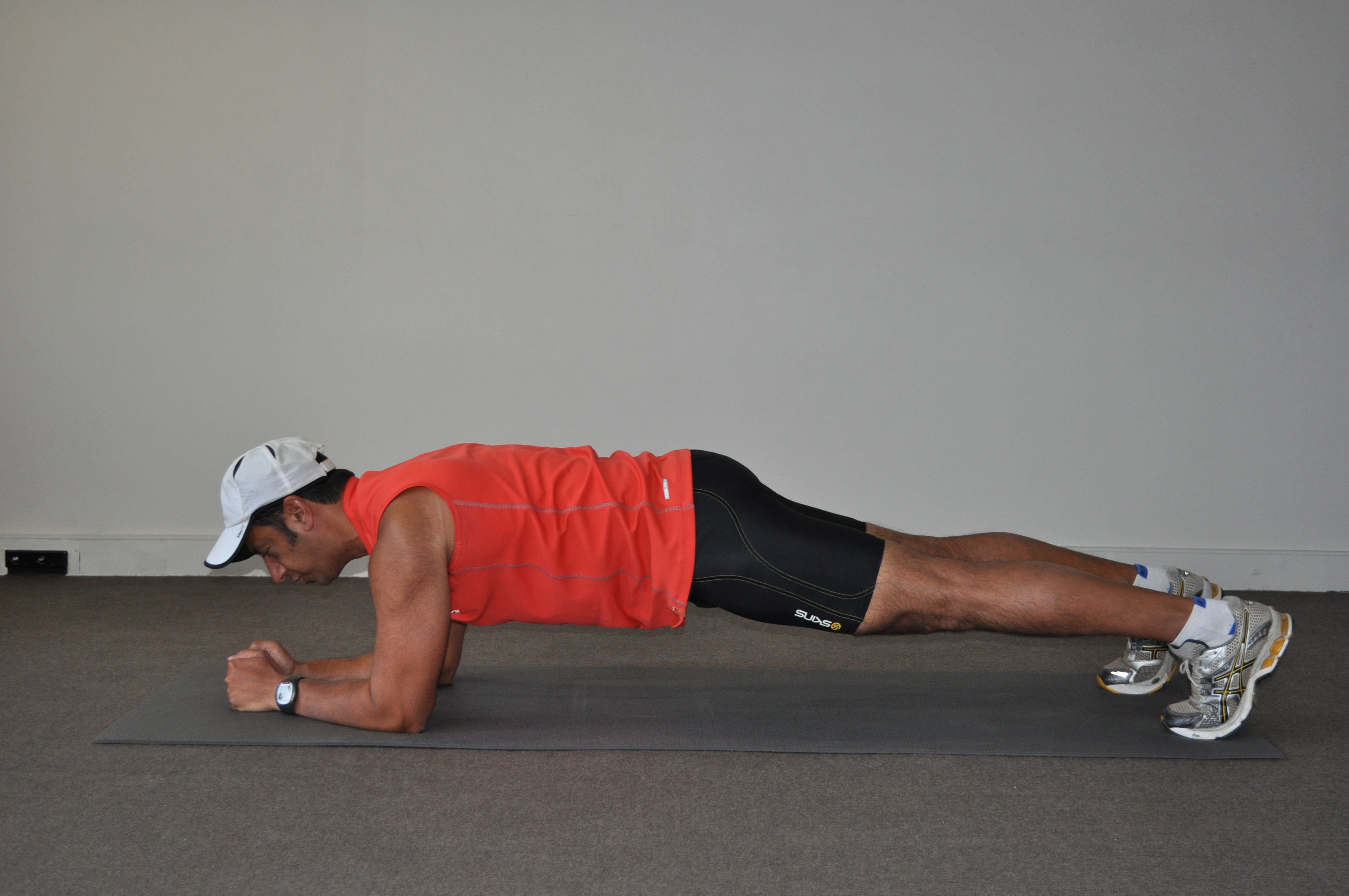
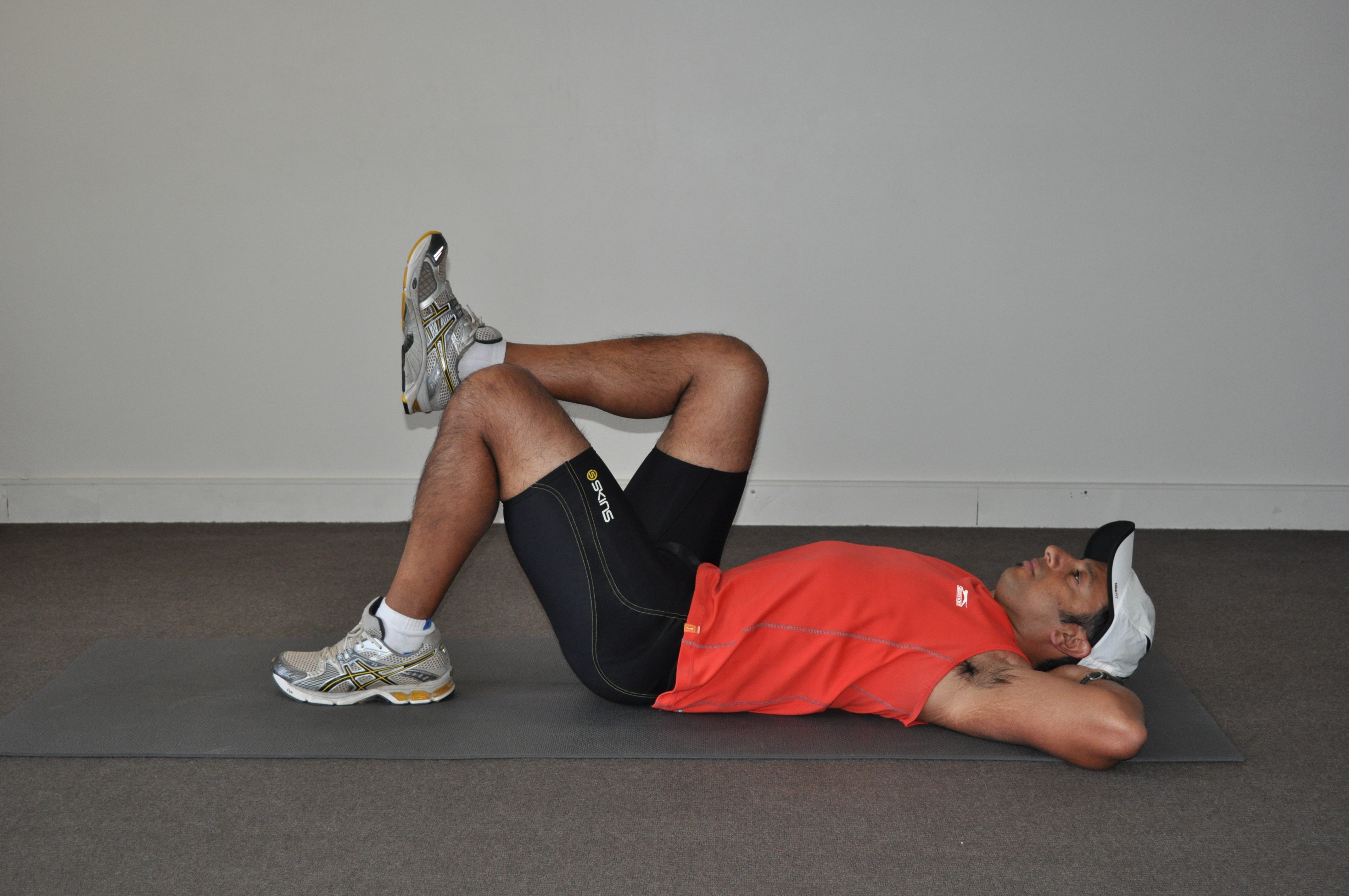
Before you start doing high intensity weights training to improve strength and power, it is essential to have a good core stabilization. It doesn’t mean to have an impressive “6-pack” (superficial abdominal muscles) or prominent back extensors which you can train by doing “crunches” or back extensions. Good core stability is achieved by the deep stabilizer muscles like the transversus abdominis and the multifidus which effectively stabilize the spine. With optimal core stability, your strong legs and arms muscles are fixed to a stable base. Therefore, they are more efficient because they don’t need to play a role in stabilization. It also reduces the risk of injury while cycling and during weight training especially with free weights. These exercises are generally easy but require concentration and good motor control to be done properly. See some examples below.

Plank

Plank

4-point kneeling

4-Point Kneeling

Crook lying leg raise

Crook Lying Leg Raise

dead bug

“Dead bug”

Stay tuned for more details on the best exercises for core stabilization specifically for cycling.

Where and how to position the handlebars?

 _DSC8022Handlebars have a considerable impact on comfort and aerodynamics. Therefore, the position greatly differs between recreational and competitive cyclists. The position you choose for your handlebars should always allow you to keep your shoulders relaxed, especially the upper trapezius (muscle on top of the shoulder).
_DSC8020The handlebars of a recreational rider should be positioned so that the trunk is bent forward by 10° to 40° from the vertical. The hands should be slightly wider than the shoulders. This more upright position reduces the stress on the arms, shoulder, neck and back but is not as aerodynamic.

To improve aerodynamics the trunk needs more forward lean and should be inclined forward by 50° to 60° with the hands about 2 cm wider than the shoulders.